Alright, let’s break down the question: “Can I use welding consumables for stainless-steel tanks?” As a welding consumables supplier, I get this question all the time—usually from tank fabricators, maintenance crews, or even guys who’ve been doing this a while but want to double-check. Let me keep this real, no fancy jargon overload, just what we see every day in the shop and out in the field. Welding Consumables

First, let’s start with the basics: what’s a stainless-steel tank? Most of the time, it’s either 304 or 316 stainless, right? 304 is the common food-grade stuff, holds water, mild chemicals. 316 has molybdenum, so it’s for saltwater, caustic chemicals, things that would eat through 304 fast. Tanks are different from, say, a car body or a pipe—they’re meant to hold stuff, so weld quality isn’t just “doesn’t leak” (though that’s a big one). It’s also about corrosion resistance, structural strength, maybe even cleanliness if it’s for food, pharma, or beverage. That’s where the consumables come in, and picking the wrong one here will ruin a tank before it even hits the customer’s shelf.
Wait, so the short answer is: sometimes, but only if you get the right consumables. A lot of guys think “stainless is stainless, so any stainless welding wire or rod works” but no—there’s a ton of nuance here. Let’s talk about what goes into a stainless welding consumable. The core is the filler metal, which has to match (or in some cases, be a little better than) the base metal’s chemistry. For 304 base metal, that’s usually ER308 for MIG/TIG, or E308 for stick welding. For 316, it’s ER316 or E316. But why not just use ER308 on 316? Because 316 needs that molybdenum to fight corrosion. Skip the moly, and the weld will rust or pit in no time—especially if the tank is holding anything with chloride (like road salt, brine, or even some cleaning chemicals). We’ve seen that happen: a fabricator used ER308 on a 316 tank for a local distillery, and within six months, the welds were pitting so bad they had to re-do the whole tank. No fun for anyone.
Then there’s the job the tank does. If it’s a low-pressure water tank for a residential building, you might get away with a standard 308 consumable, but if it’s a pressure vessel, or a tank for chemical processing, you need something with better toughness, maybe low-hydrogen. Wait, stainless is usually low-hydrogen anyway, but some coated stick rods have more moisture than others, which can cause cracking. And don’t forget about post-weld clean-up—stainless needs to be free of iron contamination, right? If you use a consumable that has too much iron oxide, that can leach into the weld area and cause rust. That’s why a lot of our customers ask for consumables labeled “low-ferrite” too—wait, ferrite is good in some welds because it prevents hot cracking, but too much? It can make the weld more prone to corrosion. Balance is everything here.
Let’s talk about stick welding vs. MIG vs. TIG, because that affects which consumable to use. Stick (SMAW) is still super common in tank fabrication, especially for thick plates. The E308 series rods—there’s E308-15, E308-16, which are the main ones. The -15 is low-hydrogen, for critical applications, -16 is easier for beginners, has cellulosic coating. For 316 stick, E316-16 is the go-to. MIG (GMAW) is faster, so a lot of shops use that for large tanks—ER308L for 304, ER316L for 316. The “L” here is key: low carbon. Why low carbon? Regular carbon will form chromium carbides in the weld heat-affected zone (HAZ), which takes chromium away from the surface, making it less corrosion-resistant. Low carbon (less than 0.03%) stops that, so you don’t get intergranular corrosion. That’s a big one for tanks that hold stuff over long periods. TIG (GTAW) is for precision work, like thin-gauge tanks, or when you need super clean welds for food. ER308L-Si is common here—silicon helps with arc stability and weld pool fluidity, which is good for tight fits.
Now, what about when people try to use other consumables? Like, maybe they have a roll of mild steel wire left over and think it’s close enough? No way. Mild steel is way more prone to rust, and the weld will be way weaker than stainless—can’t handle the pressure or the environment. We’ve had fabricators come to us after a botched job where they used mild steel wire on a stainless tank; the customer rejected it, and they had to start over. That’s a costly mistake. Another one: using consumables for duplex stainless on a standard 304 tank. Duplex (like 2205) has way more chromium and molybdenum, so the weld will be too brittle, and it’s a waste of money too—duplex consumables are way more expensive than 308.
Wait, there’s also the case of repairing an existing stainless tank. If you’re patching a weld on a tank that’s already in service, you need to match the original consumable exactly. If the original weld was ER308, don’t use ER308L—wait, no, ER308L is fine, but make sure it’s the same type as the base metal. If the tank was 316, even if the original weld looks good, check the base metal’s grade before buying filler. We get a lot of repair guys who grab whatever wire is on the shelf, then end up with a patch that doesn’t hold. Also, for old tanks, sometimes the base metal is a different grade than it says—stainless can have inconsistencies in old fabrications, so it’s a good idea to do a quick material test (like a ferrite test kit, or a spark test) before picking consumables.
What about special cases? Like, tanks that hold food, beverages, or pharmaceuticals. Those need consumables that meet food-grade standards—FDA-approved, right? So 308L or 316L that’s listed for food contact, no contaminants that could leach into the product. A lot of our consumables have that certification, so we make sure to flag that for customers who are in the food space. If you skip that, you might end up with a product that fails health inspections, which is a huge problem for any business.
Another thing: storage of the consumables themselves. Stainless welding rods and wire can absorb moisture if they’re left out in the open. For stick rods, that means they can get porous welds, or hydrogen cracking. For MIG wire, moisture can cause spatter and uneven welds. So we always tell our customers to store consumables in a dry cabinet, or in their original packaging if it’s sealed. If a rod package is open, bake it in an oven at like 250°F for an hour before use to get rid of moisture. We see guys skip that all the time, and wonder why their welds are bad. It’s a small step, but it makes a big difference for tank quality.
Let’s wrap up what we’ve covered so far. So the answer is: you can use welding consumables for stainless-steel tanks, but only if you pick the right ones. Match the filler metal chemistry to your base metal (304 = 308 series, 316 = 316 series), go low-carbon (L grade) to avoid corrosion issues, consider the welding process (stick, MIG, TIG) for ease and quality, and make sure it meets any industry or food-grade standards if needed. Don’t cut corners on consumables—tanks are a big investment, and a weld failure can lead to leaks, product loss, or even safety issues.
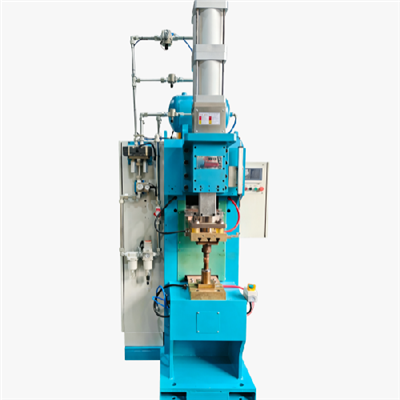
Now, if you’re not sure which consumable is right for your stainless-steel tank, don’t guess. We work with tank fabricators, maintenance crews, and small shop owners every day to pick the perfect consumable for their specific job. Whether it’s a small residential water tank, a large chemical processing vessel, or a food-grade brew tank, we can help you get the right wire, rod, or flux to get the job done right the first time. Hit us up to chat through your project—we’re here to answer questions, no pressure, just good advice from folks who know welding consumables inside and out.
Ultrasonic Welding Machine References:
- "Welding Consumables for Stainless Steel: Selection and Application" – American Welding Society (AWS), 2021.
- "Corrosion Resistance of Stainless Steel Welds" – stainless steel industry technical handbook, 2020.
- "Food-Grade Welding Materials: Compliance and Best Practices" – National Food Processors Association (NFPA), 2019.
- "Low-Carbon Filler Metals for Intergranular Corrosion Protection" – Welding Journal, Vol. 98, No. 3, 2019.
- "Storage and Handling of Welding Consumables" – American Welding Society (AWS) D1.1 Structural Welding Code, 2022.
Wuxi Haifei Intelligent Equipment Co., Limited
Wuxi Haifei Intelligent Equipment Co., Limited is well-known as one of the leading welding consumables manufacturers and suppliers in China. Please rest assured to buy high quality welding consumables made in China here from our factory. For price consultation, contact us.
Address: 28 Shuiyun Road, Yuecheng, Jiangyin, Jiangsu Province, China. 214404
E-mail: WD03@busbarwelder.com
WebSite: https://www.busbarwelder.com/
