If you’ve ever stepped into a kitchen or bathroom showroom and stopped to admire a crisp, matte-finished cabinet set, you’ve probably wondered: can modular cabinets be painted? As a modular cabinet supplier, I hear this question at least a dozen times a week—from homeowners mid-renovation, small business owners upgrading a café’s waiting area, and even other trade professionals who’ve only worked with traditional custom cabinetry. Let me pull back the curtain on what I’ve learned after years of seeing modular cabinets get painted (and messed up) by people who don’t know the specifics of our product line. Modular Cabinet

First, let’s get one critical fact straight: not all modular cabinets are made the same. When I show up to a client’s job site to deliver our standard line of stock modular cabinets, I’m handing them pieces built to precise, consistent specs: plywood or high-density particle board carcasses, thermofoil or laminated veneer doors, and solid wood or medium-density fiberboard (MDF) drawer boxes. The answer to “can you paint them?” hinges entirely on what those pieces are made of—and that’s where a lot of DIYers go wrong when they try to paint modular cabinets.
Let’s start with the easiest, most successful candidates: our solid wood and real veneer modular cabinets. If your modular cabinet doors and frames are made from oak, maple, birch, or even pine, painting them is not only possible—it’s often one of the most cost-effective ways to update a space. Years ago, I had a first-time homeowner pick up a 10-piece modular kitchen set from our warehouse; she initially wanted to strip and stain them to match her dining room set, but ended up changing her mind when she saw a sample of our matte charcoal cabinet display. She sanded her cabinet doors lightly, used a high-adhesion primer designed for wood, and finished with a low-VOC latex paint. When she texted me photos a month later, I had to do a double-take—they looked like high-end custom cabinetry, not the modular set she’d picked up off our floor. The key here is that solid wood and real veneer have a porous surface that paint can grip onto, as long as you prep correctly. Most people over-sand here, but a light scuff sand is all you need to avoid scratching through the veneer or wood grain.
The trouble comes with the most common modular cabinet components: thermofoil and laminated MDF. Thermofoil is that smooth, vinyl-like material you see on a lot of entry-level modular cabinets—it’s applied to MDF in a high-heat, high-pressure process to create a seamless, shatter-resistant surface. I can’t tell you how many people call our support line panicking because they tried to paint their thermofoil modular cabinets and the entire surface peeled off. That’s not a flaw in the cabinets—it’s a misunderstanding of the material. Thermofoil is non-porous, so paint has nothing to stick to. Even if you sand it, the vinyl layer is so smooth that the primer won’t bond. Laminated MDF follows the same logic: the melamine or laminate surface is designed to resist scratches and stains, so it resists paint too. I always warn clients who have this type of modular cabinet that painting isn’t impossible—but it’s risky. We’ve tested painting our laminated cabinet doors with a specialty bonding epoxy, but it requires multiple thin coats and meticulous prep, and even then, high-humidity areas like bathrooms can cause the paint to chip over time. Most of the time, it’s better to stick to replacing thermofoil doors if you want a new finish, rather than trying to paint them.
Then there’s MDF drawer boxes and cabinet carcasses—wait, not all MDF is the same. Our premium line of modular cabinets uses formaldehyde-free MDF, which is denser and more uniform than the cheap MDF you might find at a big-box store. MDF is actually a great surface to paint, as long as you seal it first. MDF absorbs moisture easily, so if you don’t seal it with a primer, you’ll end up with warped cabinet frames or drawer boxes after just a few months of use. A lot of DIYers skip this step, or use a regular latex primer, and wonder why their drawers won’t open six months later. I once had a contractor come to our warehouse upset because he’d painted MDF carcasses for a modular pantry project in a client’s damp basement. The MDF swelled so much that the cabinet doors didn’t fit anymore—turns out he’d used a standard primer, not a moisture-resistant one designed for MDF.
Now, let’s talk about why this matters for a modular cabinet supplier like me. Modular cabinets are designed to be flexible, affordable, and customizable for people who don’t want to wait weeks for custom cabinetry. One of the biggest perks of our product line is that clients can mix and match base cabinets, wall cabinets, and open shelving to fit their exact space, which means they often want to adjust the finish to match their style, without shelling out for a whole new set. When a client comes to me asking if they can paint their modular cabinets, I don’t just say “yes” or “no”—I walk them through their specific pieces, give them a prep guide tailored to their cabinet material, and even point them to the specialty products that work best.
For example, last year a small café owner in Portland came to me looking to update her front-of-house modular cabinet set on a tight budget. Her original cabinets were solid ash veneer, and she wanted a soft sage finish to match her new table tops. I gave her a step-by-step guide: first, wipe all doors and frames with a TSP substitute to remove grease and dirt, then do a light scuff sand with 220-grit sandpaper to create a texture for paint to grip, apply a bonding primer (we keep a bulk supply of a brand we test in our warehouse for exactly this use), and finish with two coats of semi-gloss latex paint, which is durable enough for high-traffic areas like café waiting rooms. She finished the project in three days, for less than $200 in supplies, and later told me that regular customers had complimented her “new custom cabinetry” more than once. That’s the magic of modular cabinets—they’re adaptable, and painting is one of the most accessible ways to make them feel like your own, as long as you do it right.
I also want to address a common myth I hear all the time: “Modular cabinets are cheap, so painting them is just wasting time and money.” That’s simply not true. For a lot of people, the alternative to painting their modular cabinets is paying thousands of dollars for custom cabinetry, or wasting money on a whole new set when their existing modular cabinets are perfectly functional. If you have a solid wood or real veneer modular cabinet set, painting is a way to extend their life and update your space without breaking the bank. The only time I’d argue against painting is if you have entry-level thermofoil or MDF cabinets, where the cost and effort of painting outweigh the benefit—replacing just the doors (a simple modular swap, by the way) is often cheaper and lasts longer.
Another thing I always emphasize to clients is that if you’re planning to paint your modular cabinets, plan ahead. Modular cabinets come apart easily—our doors are held on with standard screws, so you can remove all doors, drawers, and hardware before painting, which makes the job way easier than trying to paint them while they’re still installed. I recommend clearing out the entire cabinet, removing all doors and shelves, setting them up in a well-ventilated area (outside, if possible), and taking your time with prep. Rushing through sanding or primer is the most common mistake I see, and it almost always leads to peeling or chipped paint later.
As a supplier, I’ve also learned to build flexibility into our product line because so many clients want to customize their modular cabinets’ finishes. We now offer pre-painted options for our solid wood and veneer doors, so clients can skip the DIY prep and get a consistent, professional finish straight from the warehouse. But for clients who want to do the work themselves, I’m always happy to share tips, direct them to trusted products, and even help them test a small area of their cabinet surface to make sure the paint will bond correctly.
I’ve seen too many people get frustrated when they try to paint modular cabinets and it doesn’t turn out how they wanted, and that’s why I’m passionate about setting the record straight. The short answer is: yes, most modular cabinets can be painted—if you understand what they’re made of, and prep and paint them correctly. Thermofoil and laminated MDF can be painted, but it’s a trickier process with less long-term durability. Solid wood, real veneer, and even high-quality, moisture-sealed MDF are perfect candidates for a DIY or professional paint job that will last for years.
At the end of the day, modular cabinets are built to adapt to your life, not the other way around. Whether you’re updating a kitchen, a bathroom, a home office, or a small business space, your existing modular cabinets don’t have to be stuck with a finish you don’t love. With the right prep, products, and a little patience, painting them is a simple way to give them new life.
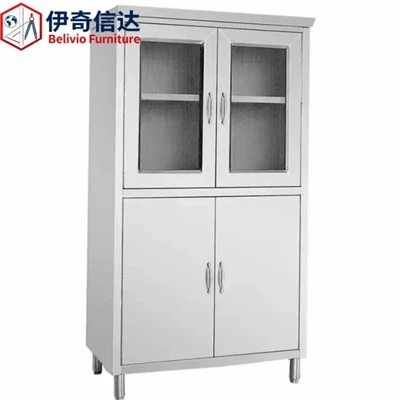
If you’re ready to customize your modular cabinets, or have more questions about painting your existing set, don’t hesitate to reach out for a consultation with our team. We can help you figure out the best path for your project, whether that’s pre-painted cabinet doors, replacement parts, or tips for a DIY paint job that will look fantastic for years.
Storage Shelf References
- American Wood Council. (2021). Finishing Wood Cabinets: Best Practices for Bonding and Durability.
- National Kitchen & Bath Association. (2022). Modular Cabinetry Care and Customization Guide.
- Paint Quality Institute. (2020). Bonding Primers for Non-Porous Surfaces: Compatibility and Application Guidelines.
- Composite Panel Association. (2019). MDF Finishing Techniques for Residential and Commercial Use.
Luoyang Belivio Furniture Co., Ltd.
As one of the most professional modular cabinet manufacturers in China, we have world-leading production equipment and strong manufacturing capabilities. Welcome to buy high-end modular cabinet for sale here from our factory. Quality products and reasonable price are available.
Address: A7-4-601, Hundsun Science and Technology Park, Luolong District, Luoyang City, Henan Province, China
E-mail: belivio@toda.group
WebSite: https://www.beliviofurniture.com/
