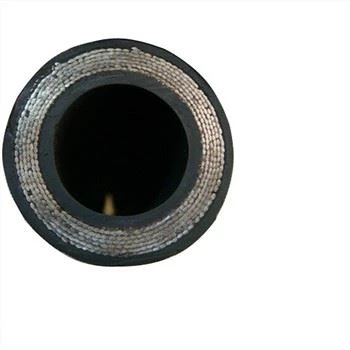
Altitude can significantly influence the performance of textile braid hydraulic hoses. As a supplier of textile braid hydraulic hoses, understanding these effects is crucial for ensuring that our products meet the diverse needs of our customers in various environments. Textile Braid Hydraulic Hose
Pressure Variations
One of the most notable impacts of altitude on textile braid hydraulic hoses is the change in atmospheric pressure. Atmospheric pressure decreases as altitude increases. At sea – level, the standard atmospheric pressure is approximately 101.3 kPa. However, at an altitude of 3000 meters, the atmospheric pressure drops to about 70 kPa.
For textile braid hydraulic hoses, this decrease in atmospheric pressure can have a direct effect on the effective pressure rating of the hose. Hydraulic systems are designed to operate within specific pressure ranges. The pressure inside the hose is a combination of the hydraulic pressure generated by the system and the external atmospheric pressure. When the atmospheric pressure is lower at higher altitudes, the net pressure acting on the hose walls is effectively higher.
This means that a textile braid hydraulic hose that is rated for a certain pressure at sea – level may experience higher stress at higher altitudes. The textile braid reinforcement in the hose is designed to withstand a specific amount of pressure. If the net pressure exceeds the rated capacity of the braid, it can lead to premature wear, bulging, or even rupture of the hose.
Temperature Fluctuations
Altitude also brings about significant temperature changes. Generally, the temperature drops by about 6.5°C for every 1000 – meter increase in altitude. Colder temperatures can make the materials used in textile braid hydraulic hoses more brittle.
The textile braid and the elastomeric inner and outer layers of the hose can be affected by low temperatures. The elastomer may lose its flexibility and elasticity, which can lead to cracking under pressure. The textile braid may also become less ductile, reducing its ability to absorb and distribute stress evenly.
Moreover, rapid temperature changes, which are common at higher altitudes, can cause thermal expansion and contraction of the hose materials. These repeated cycles of expansion and contraction can fatigue the materials over time, leading to degradation of the hose structure. For example, if a hose is subjected to a sudden drop in temperature, the inner and outer layers may contract at different rates, creating internal stresses that can damage the hose.
Air Density and Oxygen Content
The density of air and the oxygen content decrease with increasing altitude. In hydraulic systems, the presence of air in the fluid can cause problems such as cavitation. Cavitation occurs when the pressure in the hydraulic fluid drops below the vapor pressure, causing the formation of vapor bubbles. These bubbles then collapse when they enter a region of higher pressure, generating shock waves that can damage the internal components of the hydraulic system, including the textile braid hydraulic hose.
The reduced oxygen content at high altitudes can also affect the chemical stability of the hose materials. Some elastomers and textile fibers may be sensitive to oxidation. In an environment with lower oxygen levels, the rate of oxidation may be reduced, which can be beneficial in some cases. However, it can also affect the curing process of some rubber – based materials during production, which may impact the long – term performance of the hose.
Moisture and Humidity
Altitude can influence moisture and humidity levels. Higher altitudes often have lower relative humidity. Dry conditions can cause the elastomeric components of the textile braid hydraulic hose to dry out and crack. The lack of moisture can also lead to increased static electricity generation, which can be a hazard in some hydraulic applications.
On the other hand, at certain altitudes and under specific weather conditions, there may be a risk of ice formation. If water enters the hydraulic system and freezes, it can cause blockages and damage to the hose. The expansion of water as it freezes can also put excessive pressure on the hose walls, potentially leading to rupture.
Mitigating the Effects of Altitude
As a supplier of textile braid hydraulic hoses, we take several measures to mitigate the effects of altitude on our products. First, we carefully select materials that are more resistant to temperature variations and high – altitude conditions. For example, we use specially formulated elastomers that maintain their flexibility at low temperatures and have better resistance to oxidation.
We also conduct rigorous testing of our hoses under simulated high – altitude conditions. This includes subjecting the hoses to different pressure, temperature, and humidity levels to ensure that they can withstand the harsh environments at high altitudes. Our testing procedures are in line with international standards to guarantee the quality and reliability of our products.
In addition, we provide detailed technical specifications and installation guidelines to our customers. These guidelines include instructions on how to properly install and maintain the hoses in high – altitude environments. For example, we recommend using appropriate insulation materials to protect the hoses from extreme temperatures and installing air – removal systems to prevent cavitation.
Importance for Different Industries
The effects of altitude on textile braid hydraulic hoses are of great importance in various industries. In the aerospace industry, aircraft operate at high altitudes where the changes in pressure, temperature, and air density are extreme. Hydraulic systems in aircraft rely on high – performance textile braid hydraulic hoses to ensure safe and efficient operation.
The mining industry also often operates in high – altitude regions. Mining equipment such as excavators and loaders use hydraulic systems extensively. The proper functioning of the textile braid hydraulic hoses is crucial for the productivity and safety of mining operations.
Similarly, the construction industry may encounter high – altitude projects in mountainous regions. The hydraulic systems in construction machinery need to be reliable to ensure the smooth progress of projects.
Conclusion
Altitude has a profound effect on the performance of textile braid hydraulic hoses. The changes in pressure, temperature, air density, moisture, and humidity can all impact the integrity and functionality of the hoses. As a supplier, it is our responsibility to develop high – quality products that can withstand these challenging conditions.

We are committed to continuously improving our products and providing the best solutions to our customers. Our in – depth understanding of the effects of altitude allows us to offer hoses that meet the specific requirements of high – altitude applications.
Thermoplastic Hydraulic Hose If you are in need of textile braid hydraulic hoses for applications at high altitudes or any other environments, we are here to help. Our team of experts can provide you with detailed technical advice and guidance to ensure that you select the right product for your needs. We invite you to contact us for further discussions on your procurement requirements. We look forward to working with you to meet your hydraulic hose needs.
References
- Hydraulic Handbook. Edited by the Fluid Power Society.
- ASTM International Standards for Rubber and Plastic Hoses and Tubing.
- Technical Publications on Aerospace and Industrial Hydraulic Systems.
Hebei Qianli Rubber Products Co., Ltd.
As one of the most professional textile braid hydraulic hose manufacturers and suppliers in China, we have world-leading production equipment and strong manufacturing capabilities. Please feel free to buy bulk durable textile braid hydraulic hose made in China here from our factory.
Address: West industrial Zone, Jing County, Hengshui City, Hebei Province, China.
E-mail: manager@hebeiqianli.com
WebSite: https://www.qianlirubber.com/
