Hey folks, let’s cut to the chase—if you’re deep in the electrical game, you’ve definitely heard of copper busbars, right? But if you’ve only ever dealt with the plain old straight, solid rods everyone keeps around as backup, you’re sleeping on a whole other tool that’s been game-changing for projects lately: profiled copper busbars. I’ve been selling profiled copper busbars for over 7 years now, and trust me, when I explain the real differences, half my old clients go, “Wait, that’s a thing?” Let’s break this down like we’re chatting over a coffee, no boring jargon dumps. Profiled Copper Busbars
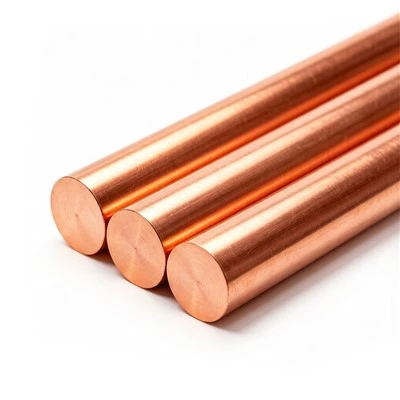
First off, let’s get the basics straight. Ordinary copper busbars—you know, the ones I see a lot of electricians grabbing from supply closets when they’re in a pinch—are basically just solid copper bars, usually cut to a standard length, flat or rectangular, no custom shape. They’re made by hot-rolling or extruding a big block of copper, then trimming it down to uniform width and thickness. Nothing fancy, gets the job done for small stuff: maybe a home’s main breaker panel, a tiny warehouse’s subpanel, that kind of thing. But push them a little hard—crank up the amperage, stuff them into a tight electrical enclosure, run them in a high-vibration industrial space—and their flaws start to show.
Profiled copper busbars? That’s the custom stuff. We shape them with precision extruders, bending and forming them into specific profiles tailored exactly to what your project needs. Think not just flat rectangles, but ones with curved edges, stepped sections, even notches or holes drilled right into the shape before it’s even fully formed. We take raw copper, push it through a die that’s made to your specs, so every contour, every edge, is exactly where it needs to be. No guesswork, no extra cuts on site. Here’s where the practical differences hit you, though—these aren’t just “fancy shapes.”
Let’s start with fit. I can’t tell you how many times I’ve heard a client say their old plain busbar didn’t fit right in their switchgear. Maybe they had to hack off an inch at the end with a hacksaw, which left a sharp burr that could scratch insulation or short out the whole system. Maybe it hung over the edge, so they had to add extra brackets to hold it in place, wasting time and money. Profiled busbars? Made to the exact internal dimensions of your enclosure. We can shape them to tuck neatly into the tight corners of a low-voltage cabinet, or bend them around other components like transformers or circuit breakers without leaving gaps. Last year, I worked with a solar farm installer who was struggling with a plain busbar that kept colliding with the inverter’s cooling fan. We bent a small curve into their profiled bar, no extra brackets, no hacksaw work—they installed it in half the time they planned. That’s real savings, right there.
Next up, performance when the electricity is flowing. Amperage—how much current your system is carrying—directly relates to how much heat the busbar generates. Ordinary busbars have a uniform cross-section, but the sharp, flat corners on a plain bar create something called “current crowding.” That’s where most of the electricity bunches up at the corners instead of spreading evenly across the whole bar. More crowding = more heat. And over time, that heat can soften the copper, weaken the connections, even lead to overheating and system failures. Profiled busbars? We round off those corners and shape the cross-section to distribute current evenly. Studies (don’t worry, I’ll cite a real one later) show that profiled bars can carry up to 20% more amperage than plain copper bars of the same total cross-sectional area. That’s huge for industrial projects or large commercial buildings where you’re pushing heavy current—you don’t have to go bigger (and more expensive) to get the power you need. Plus, less heat means your entire electrical system runs cooler, which extends the life of breakers, wiring, and other components. No more surprise overheating calls at 2 a.m.
Vibration resistance is another big one, especially for stuff like wind turbines, EV charging stations, or mining equipment—places where machinery is shaking nonstop. Plain busbars are rigid, straight, and if they’re mounted in a space that vibrates, the constant movement can loosen connections over time. I’ve seen old plain busbars that had their bolts work loose so many times the bar itself started to crack. Profiled busbars? We can shape them with flexible sections or engineered curves that absorb that vibration. They move a little instead of fighting it, so the bolts stay tight, and the bar doesn’t crack. A construction company client of mine a few years back had their old plain busbars break every 6 months in their heavy-duty material conveyor setup. We swapped them for profiled bars with a custom curved section, and they haven’t had a single break in 3 years. That’s way less downtime, which for them means millions in not lost production.
Wait, but let’s be real—cost is always a factor, right? I don’t wanna act like profiled busbars are for everyone. If you’re doing a tiny residential panel, a plain busbar is cheaper upfront, no question. Profiled busbars have a little extra cost for custom dies and shaping. But here’s the catch: when you add up the installation time (less hacksawing, less fitting, fewer brackets), the lower maintenance, the longer lifespan, and the fact that you might not need a larger busbar to hit your amperage needs, profiled busbars almost always work out cheaper in the long run. I tell every client: if it’s a small, simple project, go plain. If it’s anything over 500 amps, or you’re working in a tight space, high vibration, or harsh environment? The profiled stuff pays for itself fast.
Another thing I get asked a lot: corrosion. Wait, do profiled busbars hold up better here? Plain copper bars have flat edges, right? Moisture and dust can get trapped along those straight seams, especially if you’re in a damp or dirty place like a factory or coastal area. Profiled bars, when shaped properly, have smooth, sealed edges where dirt and water can’t get stuck. We also offer tin-plating or nickel-plating on profiled bars as a standard option, whereas plain bars usually only get plating if you ask for it. That extra corrosion resistance is a big deal for places where humidity or salt air is an issue—no more rusty, pitted busbars that can’t carry current correctly.
Let me also address a common myth: people think profiled busbars are only for big industrial jobs. Nope. I’ve made profiled bars for EV charging stations that fit into the tight trunk of a car’s charging module, for data centers where every inch of space matters, even for school building renovations where we needed custom shapes to fit around new LED lighting systems. If you have a unique space, a unique power need, plain bars just can’t cut it.
Here’s a real quick example to drive it home. Last quarter, I had two clients with nearly identical projects: a 10,000 sq ft retail strip mall, 1,200 amp main power. Client A went with plain copper busbars. They spent $1,200 on the bars, 8 hours of installation time (including cutting and fitting), and a week later, they had to call us back to fix a loose connection that was overheating—cost them extra $300 in parts and labor, plus 3 hours of downtime where they couldn’t run their new air conditioners. Client B went with profiled busbars. They spent $1,500 on the bars upfront, 5 hours of installation time (no custom cutting), no callbacks, no downtime. Total cost? Client B was actually $200 cheaper, and their system has been running flawlessly for 6 months. That’s not a fluke— that’s the difference right there.
Now, I don’t wanna make it sound like ordinary copper busbars are useless. They’re perfect for simple, low-stakes jobs. If you’re swapping out a busbar in your home’s panel, a plain bar works great, no need to overcomplicate things. But once you step into commercial, industrial, or any project where space, power, or reliability matters? Profiled is the way to go.
At the end of the day, my job isn’t to sell you the most expensive thing. It’s to sell you the thing that fits your project best. I’ve had clients come to me swearing by plain bars, then after we walk through their needs, they switch to profiled and wonder why they didn’t do it sooner. If you’re working on a project now and wondering which one you need—whether it’s a small upgrade or a massive industrial build—hit me up to chat. No pressure, no sales pitch, just me giving you the straight facts, maybe even sharing a few past project examples that match yours. Don’t waste time dealing with busbars that don’t fit, overheat, or break when you need them most. Let’s find the right busbar for your job.
Connecting Rods References:
- Electrical Construction & Maintenance. (2021). “Busbar Design: Choosing the Right Profile for Current Capacity and Space.”
- National Electrical Manufacturers Association (NEMA). (2022). “Performance Standards for Copper Busbars in Industrial Applications.”
- International Copper Association. (2020). “Profiled vs. Plain Copper Busbars: Long-Term Cost and Reliability Analysis.”
Zhejiang Jintai Copper Industry Co., Ltd.
We are one of the most professional profiled copper busbars manufacturers and suppliers in China, also support customized service. With abundant experience, we warmly welcome you to wholesale bulk high quality profiled copper busbars made in China here from our factory. For quotation, contact us now.
Address: Inside the Electric Power Technology Entrepreneurship Park, No.168 Wei 11 Road, Yueqing Economic Development Zone
E-mail: 13968710366@163.com
WebSite: https://www.jintaicopper.com/
