If you’ve ever walked the floor of a CNC machining shop, watched a machinist reach for a cutting tool, and lingered long enough to hear them debate which tool will make the difference between a perfect part and a scrapped one, you’ve probably heard the terms “high helix roughing flat end mill” and “normal roughing flat end mill” thrown around a lot. As someone who’s spent 12 years supplying flat end mills to shops across the Midwest, I’ve fielded this exact question hundreds of times, and I’ve seen firsthand how picking the wrong one can turn a smooth run into a day-long headache. Let’s break this down the way I explain it to every new customer—not with jargon for jargon’s sake, but with real, shop-tested differences that will save you time, money, and tool wear. Flat End Mill
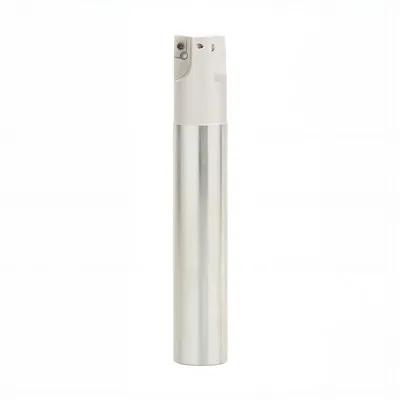
First, let’s start with the basics: both tools are roughing flat end mills, which means their whole job is to remove as much excess material as quickly and efficiently as possible, leaving a surface that’s good enough to finish off with a finishing tool later. They both have straight cutting edges and a flat tip, so they work for pockets, slots, and facing operations, the bread and butter of most general machining work. The real gaps start with one tiny, seemingly trivial feature: the helix angle.
A normal roughing flat end mill, most commonly made with a helix angle of 30 to 35 degrees, is the workhorse of the machining world. This is the traditional design that’s been around for decades, perfected for general use. A high helix roughing flat end mill, on the other hand, has a helix angle that jumps up to 45 to 55 degrees—sometimes even higher for very specific materials. That 15 to 20 degree difference isn’t just a number stamped on the tool’s side; it changes everything about how the tool interacts with the workpiece.
Let’s talk about chip evacuation first, because if you’ve ever seen a chip clog a tool and cause a broken end mill or a scratched part, you know this is non-negotiable. The normal helix angle of a standard roughing mill cuts a wide, relatively shallow path through the material, and the chip flows up the flute in a steady, predictable way. For most mild steels, aluminum, and even some plastics, that works fine. But when you’re machining tougher materials—stainless steel, titanium, Inconel, or even solid aluminum blocks that spit out long, stringy chips—that shallow angle creates friction between the chip and the tool’s flute walls. The chip gets stuck, builds up heat, and before you know it, you’re paused, clearing chips with a pick, losing spindle time, and risking tool deflection that warps your workpiece.
That’s where the high helix design shines. The steeper angle acts like a ramp that yanks chips up and out of the cut faster, before they can clump together. When I was on a job last year for a manufacturer of aerospace brackets, they were running a 4140 steel block on a 3-axis mill with a standard 35-degree roughing end mill. They were getting 12 parts a day, but they were breaking at least one tool every two shifts because of chip clogging. Swapping in our high helix roughing end mill bumped their output to 18 parts a day, and tool breakage dropped to less than one a week. That’s not a small win—that’s thousands of dollars in saved downtime and tool costs every month, all from changing a single tool.
Next up: cutting force and deflection. Deflection is the silent killer of roughing operations. It’s when the tool bends slightly under the pressure of cutting, causing uneven cuts, chatter marks on the part, and even tool breakage. The steeper helix angle of a high helix tool spreads the cutting force along a longer portion of the tool’s flute, instead of concentrating it in a smaller area like the normal helix angle does. That means less radial and axial force on the spindle and tool holder. For shops that run old or mid-range CNC machines that don’t have the rigidity of new, heavy-duty mill-turn centers, this is a game-changer.
I had a customer in Chicago a few months back who was machining 6061 aluminum for custom bike frames on a 10-year-old VMC. He was using a standard roughing end mill, and he was limited to a feed rate of 12 inches per minute because the tool would chatter so bad it would leave waves on the pocket walls. Switching to our high helix roughing end mill let him crank that feed rate up to 22 inches per minute, no chatter, no rework needed. That extra 10 inches per minute might not sound like much, but over a 10-hour shift, that’s an extra 60 inches of material removed—enough to make two extra frames a day.
But wait—this isn’t to say the high helix is always better. The normal roughing flat end mill still has a place, and it’s important to know when to reach for which one. For shallow cuts, small pockets, or operations on thin workpieces where you don’t want extra radial force, the lower helix angle is more stable. It’s also cheaper, and if you’re machining soft, low-toughness materials like wood, acrylic, or mild plastic, the lower angle works just fine.
Another key difference: tool life. The steeper helix of the high helix mill reduces friction, which means less heat is generated at the cutting edge. Heat is the biggest enemy of cutting tool coatings, and more heat means faster coating wear and shorter tool life. In the aerospace bracket job I mentioned earlier, the customer was getting 20 parts per standard roughing end mill before it needed to be resharpened. With the high helix mill, he was getting 35 parts per tool. That’s 75% longer tool life, which adds up to less money spent on tooling inventory over time.
Of course, there are caveats. High helix roughing end mills aren’t perfect for every job. If you’re machining deep, narrow slots, the steeper helix can make the tool more prone to pulling itself out of the cut if the spindle speed is too high, or if you’re running very light cuts. You also have to make sure your tool holder is rigid—if you’re using a standard ER collet that has a lot of runout, the benefits of the high helix angle get diminished fast, because the tool isn’t held securely enough to take advantage of the reduced cutting force.
So when should you choose which? Here’s the quick guide I give every customer: pick a normal roughing flat end mill if you’re working with soft materials, doing shallow cuts, running old machines that don’t have high spindle speeds, or on a tight budget where the higher upfront cost of high helix tools isn’t worth it. Pick a high helix roughing flat end mill if you’re machining tough materials like stainless, titanium, or thick aluminum, doing deep cuts, looking to reduce downtime from chip clogging, or want to increase feed rates and part output.
At the end of the day, this industry isn’t about one tool being “better” than another—it’s about picking the right tool for the job. I’ve seen shops waste tens of thousands of dollars over the years because they grabbed the same tool for every operation, never stopping to think about how a tiny change like helix angle could make all the difference. If you’re tired of chip clogging, tool breakage, and slow part runs, and you want to see what the right roughing end mill can do for your operation, reach out to our team to discuss your specific applications. We work with shops of all sizes, from small jobbing shops to large production facilities, to match them with the right tools to meet their needs, no generic advice, no one-size-fits-all solutions.
Grooving Inserts References:
- ISO 13399:2006, Cutting tool data representation and exchange, International Organization for Standardization, Geneva, 2006.
- Machining Science and Technology, Volume 12, Issue 2, 2008, pp. 187-205, “Effect of Helix Angle on Cutting Forces and Tool Life in End Milling of AISI 1045 Steel”
- Society of Manufacturing Engineers (SME), “High Performance End Milling: Principles and Practice”, 2019.
Small Craftsman (Shandong) Machine & Tools Co., Ltd.
Small Craftsman (Shandong) Machine & Tools Co., Ltd. is one of the most experienced flat end mill manufacturers and suppliers in China, also supports customized service with low price. Please feel free to buy bulk high quality flat end mill in stock here from our factory. Contact us for pricelist.
Address: No.9 Quanxin Rd., Sishui Economic Developing Zone, Jining, Shandong, China.
E-mail: 6196@ocutchina.com
WebSite: https://www.ocutooling.com/
