If you’ve ever stood in a switchgear room at 2 a.m. during a heatwave, watching the temperature gauge climb past what the equipment manual says is “normal,” you know how stressful that uncertainty can be. As a Ring Main Unit (RMU) supplier, I’ve fielded dozens of panicked calls from facility managers, maintenance teams, and project engineers asking the same question: What’s the real operating temperature range for an RMU? Is it the generic number in the catalog, or is there a narrower, site-specific sweet spot that keeps my grid running without unplanned outages? The short answer is that there’s no one-size-fits-all range, but over 12 years of working with RMUs in residential neighborhoods, industrial parks, and remote utility sites, I’ve learned how to separate manufacturer guidelines from the real-world conditions that make these units perform—or fail. Let’s break this down, because getting the temperature range right isn’t just about compliance—it’s about protecting the power that keeps people and businesses running. Ring Main Unit
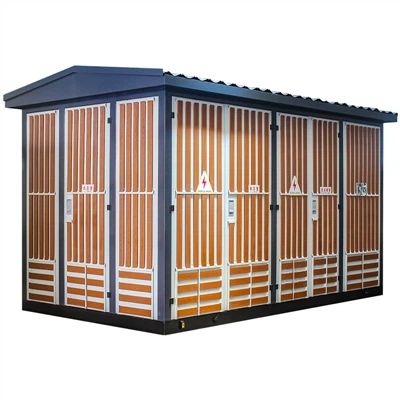
First, let’s start with the basics: what an RMU is, and why temperature matters so much. An RMU is a compact, enclosed switchgear unit that distributes medium-voltage (MV) power—usually 11kV, 22kV, or 33kV—across distribution grids. Think of it as a traffic controller for electricity: it switches circuits, isolates faults, and reroutes power without taking the entire line down. Each RMU has core components that generate heat during operation: the vacuum interrupters that switch power, the busbars that carry current, and the insulating materials that prevent electrical arcing. Heat is the enemy here. For every 10°C rise above a component’s rated temperature, insulation life cuts in half, and contact resistance in the switching mechanism can creep up, leading to overheating, arcing, or even a catastrophic failure. Conversely, extreme cold isn’t harmless either—lubricants in moving parts can thicken, rubber seals can crack, and battery-powered control circuits can stop working when temperatures drop too low. That’s why the operating temperature range isn’t just a line in a manual; it’s the difference between a unit that lasts 20 years and one that needs replacement in 5.
Now, let’s get to the numbers, but with context. Most reputable RMU manufacturers publish a standard operating temperature range on their datasheets, and the most common one I see is -25°C to +55°C (-13°F to 131°F). But here’s the catch: that range is a generic, maximum-rated value tested in controlled lab conditions, not the real-world range that applies to every installation. Let’s dig into what each end of that range actually means, and why site-specific conditions often narrow it.
Starting with the low end: -25°C. That’s the minimum temperature most industrial-grade RMUs are tested to, but it’s only valid if your unit is installed in an uninsulated cabinet or a standard utility vault. If you’re installing an RMU in a remote, unheated location in northern Canada, Scandinavia, or the Rocky Mountains, where winter temperatures regularly drop to -35°C or lower, that -25°C mark becomes a problem. I once worked on a project for a mining company in northern Alberta that tried to use standard RMUs for their on-site substation. The first winter, temperatures hit -40°C, and the RMU’s control mechanism seized up—they had to send a technician in a 4×4 with a heated blanket to unfreeze it, costing them $12,000 in emergency downtime and repairs. That’s why we started offering cold-climate RMUs with upgraded lubricants for moving parts, heated control compartments, and temperature-stabilized batteries, which can operate reliably down to -40°C. The tradeoff? Those units cost 10-15% more, but they eliminated the risk of winter failures that would shut down their entire mining operation.
On the high end, the standard +55°C mark is even more misleading, because heat is the biggest cause of RMU failures in warm climates. Let’s be clear: +55°C isn’t a temperature you’ll find in a well-ventilated switchgear room, but it’s common in direct sunlight, enclosed concrete vaults, or poorly ventilated underground installations in places like the Middle East, the American Southwest, or Southeast Asia. I’ve seen underground vaults in Phoenix reach 60°C (140°F) in July, even with basic ventilation. When an RMU is operating at those temperatures, the internal components can exceed their rated limits in just a few hours. For example, the copper busbars inside an RMU generate heat as current flows through them, and if the surrounding ambient temperature is 55°C, the busbar’s internal temperature can jump to 80°C—way above the 70°C maximum for typical insulation materials. That’s why we recommend a 40°C upper limit for installations in hot, enclosed spaces, not 55°C. We also work with clients to size ventilation systems, install heat sinks, or specify RMUs with improved thermal insulation for these sites. In one project for a new residential development in Dubai, we sized a 12-unit RMU bank with 30% more ventilation than standard specifications, and we’ve measured their average operating temperature at 42°C in the peak of summer—well within the safe range, with no performance issues in the three years since installation.
But here’s the thing: the temperature range isn’t just about ambient air temperature. There are three other factors that can throw a standard range out the window, even if you’re operating within the published limits. First, load level. An RMU carrying 100% of its rated load will generate 2-3 times more heat than one carrying 30% load during off-peak hours. For example, an RMU rated for 630A will operate at 40°C ambient and 70°C internal when carrying 630A, but if it’s only carrying 200A, that same internal temperature drops to 55°C—making it far more tolerant of ambient extremes. Second, installation enclosure. RMUs installed in metal cabinets conduct heat differently than those in concrete vaults or open-air structures. Metal cabinets can trap heat, with temperatures rising 10-15°C higher than outside air, while open-air units cool much faster. Third, altitude. At altitudes above 1,000 meters, air is thinner, which reduces cooling efficiency. An RMU operating at 2,000 meters will run 5°C hotter than the same unit at sea level, even with the same ambient temperature. That’s why our technical team always asks for site-specific details: where will you install the RMU? What’s the average seasonal temperature? What’s the maximum recorded temperature? What’s the expected load level? We never just send a standard unit; we adjust the specifications to match the actual site conditions.
I’ve seen too many projects go wrong because teams rely solely on generic temperature ranges from a catalog. Last year, a small manufacturing plant in Texas bought a used RMU for their new extension, assuming it would handle the 45°C summer temperatures. They didn’t know the unit had been installed in a shaded, well-ventilated location before, so when they put it in their enclosed substation next to their furnaces, it overheated and failed three months later, costing them $50,000 in lost production. When they called us for a replacement, we didn’t just sell them a new unit—we walked them through their site’s specific conditions, adjusted the ventilation, and picked an RMU rated for up to 50°C ambient, so they wouldn’t have the same problem. That’s the difference between working with a supplier that only pushes a product and one that understands the real-world needs of their clients.
Now, let’s talk about best practices for maintaining your RMU within a safe temperature range, because even the best unit will fail if you don’t monitor the conditions around it. First, install temperature sensors. We always include temperature monitoring as an optional add-on for our RMUs, but even if you retrofitting sensors to your existing units, it’s worth it. Track both ambient air temperature and internal component temperature monthly, and alert your team if either climbs above or drops below the recommended range. Second, ventilate properly. For outdoor units, make sure they’re not installed in direct sunlight for 12 hours a day—use sunshades or plant vegetation to block direct light. For vault installations, install exhaust fans that turn on when the temperature hits 40°C, and clean vent grills quarterly to prevent dust buildup that blocks airflow. Third, conduct annual temperature checks. Use an infrared thermometer to scan the busbars, switching mechanisms, and cable connections inside the RMU. If any part is 10°C hotter than the rest, that’s a sign of loose connections or corrosion, which will generate more heat over time. Fourth, adjust specifications for extreme climates. If you’re in a place with temperatures below -20°C, ask for an RMU with heated control systems and low-temperature lubricants. If you’re in a place above 45°C ambient, ask for units with improved insulation and higher heat-rated components.
At the end of the day, the “normal” operating temperature range for an RMU isn’t a fixed number—it’s a tailored range that fits your specific site. For most standard installations in temperate climates, that’s roughly -20°C to +50°C, a bit narrower than the published -25°C to +55°C, to account for real-world enclosure and load conditions. For cold climates, it can go as low as -40°C, and for hot, enclosed sites, it tops out at 45°C, not 55. The key is to not rely on generic data—work with a supplier who will ask you about your site, understand your needs, and help you pick the right unit for the conditions it will actually operate in.

If you’re planning a new installation, replacing an old RMU, or dealing with temperature-related performance issues on your current grid, I’m here to help. We’ve worked with utilities, developers, and industrial clients across 20 countries, and we can help you find the right RMU for your specific temperature and site conditions, without the hassle of working with a one-size-fits-all supplier. Reach out to our team to discuss your project, and we’ll send you a custom recommendation tailored to your needs.
High-Voltage Switchgear References
- International Electrotechnical Commission (IEC) 62271-200: High-voltage switchgear and controlgear – Part 200: AC metal-enclosed switchgear and controlgear for rated voltages above 1 kV and up to and including 52 kV
- IEEE Std C37.12.2: IEEE Standard for Gas-Insulated Switchgear (Above 52 kV)
- National Electrical Manufacturers Association (NEMA) 250: Enclosures for Electrical Equipment
Jiangxi Yihong Electric Power Technology Co., Ltd.
Address: Chating Industrial Park, Guangxin District, Shangrao City, Jiangxi Province
E-mail: 15779933057@163.com
WebSite: https://www.yihcn.com/
