Hey there! I’m a supplier of drive motors, and I often get asked how an encoder can boost the accuracy of these motors. In this blog, I’m gonna break it all down for you, explaining the ins and outs of what encoders are, how they work with drive motors, and why they’re a game – changer when it comes to accuracy. Drive Motor

What is an Encoder Anyway?
Let’s start from the basics. An encoder is like a super – smart sensor that’s all about keeping track of the position, speed, and direction of a rotating object. In our context, that rotating object is the drive motor. There are two main types of encoders: absolute and incremental.
An absolute encoder gives you the exact position of the motor shaft at any given moment. It’s like having a GPS for your motor. No matter when you check it or if the power goes out and comes back on, it can tell you precisely where the shaft is. It’s super useful in applications where you need to know the exact starting and ending positions, like in CNC machines or industrial robots.
On the other hand, an incremental encoder measures the changes in position. It counts the number of pulses as the shaft rotates. To figure out the actual position, you need to know the starting point. It’s like counting steps. You need to know where you started from to know how far you’ve walked. Incremental encoders are great for applications where speed and relative position changes are more important, like in conveyor belts or simple automation systems.
How Encoders Work with Drive Motors
So, how do these encoders actually team up with drive motors? Well, it’s all about feedback. Think of the encoder as the eyes and ears of the motor control system.
The encoder sends signals to the motor controller based on what it detects. For example, if it’s an incremental encoder, it’ll send a series of pulses. The more pulses in a given time frame, the faster the motor is rotating. The motor controller uses these signals to adjust the motor’s operation. If the motor is supposed to spin at a certain speed but the encoder detects that it’s going too slow, the controller can increase the power to the motor to speed it up.
In the case of an absolute encoder, it provides the controller with real – time position information. This is crucial for tasks like precise positioning. Let’s say you have a robotic arm that needs to pick up an object from a specific location. The absolute encoder will tell the controller exactly where the arm is at all times, allowing for very accurate movements.
Improving Accuracy in Speed Control
One of the main areas where an encoder really shines is in speed control. Without an encoder, a drive motor might struggle to maintain a consistent speed. There could be all sorts of factors that cause the speed to fluctuate, like changes in the load on the motor.
Let’s say you’ve got a conveyor belt that needs to move at a constant speed to transport products evenly. If the motor speed drops because of increased friction or a heavier load, without an encoder, the belt might start moving slower, leading to product jams or other issues.
But when you add an encoder, it can detect these speed changes right away. The encoder sends that information to the motor controller, which then adjusts the power supplied to the motor. This continuous feedback loop ensures that the motor can maintain a very precise speed, no matter what’s going on in the external environment.
Precision in Positioning
Another huge advantage of using an encoder is the improvement in positioning accuracy. In many industrial applications, even the slightest deviation in position can cause major problems.
Take a 3D printer, for example. To create a detailed and accurate model, the print head needs to move to very specific locations. An encoder on the drive motors that control the print head’s movement can provide the exact position information. This allows the printer to make precise movements, layer by layer, resulting in a high – quality print.
In a more heavy – duty industrial setting, like a large – scale manufacturing plant that uses automated machinery to assemble products, precise positioning is crucial. Encoders on the drive motors ensure that parts are placed exactly where they need to be, reducing errors and improving the overall quality of the final product.
Enhanced Torque Control
Encoders also play a big role in torque control. Torque is the turning force of the motor. Different applications require different levels of torque at different times.
In a crane, for instance, when it’s lifting a heavy load, it needs a lot of torque. But as the load is being moved around, the required torque might change. An encoder can sense the load on the motor and the position of the shaft. Based on this information, the motor controller can adjust the torque output accordingly. This means the crane can operate more efficiently and safely, with the right amount of power being applied at all times.
Case Studies: Real – World Examples of Encoder – Enhanced Accuracy
Let’s look at a couple of real – world examples to see how encoders improve motor accuracy in practice.
First, there’s a food packaging company. They were having problems with their filling machines. The drive motors that controlled the filling nozzles couldn’t keep a consistent speed, which led to uneven filling levels in the packages. After installing encoders on the motors, the situation improved dramatically. The encoders provided feedback on the motor speed, allowing the controller to make instant adjustments. As a result, the filling levels became much more consistent, reducing product waste and improving customer satisfaction.
Another example is a semiconductor manufacturing facility. They use highly precise robotic arms to handle delicate semiconductor wafers. Before adding encoders to the drive motors of these robotic arms, there was a small but significant error in positioning. This sometimes led to damaged wafers, which were very expensive. Once the encoders were in place, the robotic arms could achieve much higher positioning accuracy. The number of damaged wafers dropped significantly, saving the company a lot of money in the long run.
Why You Should Consider Encoders for Your Drive Motors
If you’re still on the fence about whether to incorporate encoders into your drive motor systems, here are some solid reasons:
- Higher Product Quality: As we’ve seen from the case studies, encoders can lead to more accurate motor operation, which in turn results in better – made products. Whether you’re manufacturing consumer goods or high – tech electronics, improved quality can give you a competitive edge in the market.
- Increased Efficiency: Precise speed, position, and torque control mean that your motors are using power more efficiently. This can lead to lower energy costs and longer motor life. You’ll also reduce the amount of downtime due to errors or malfunctions.
- Flexibility: Encoders make it easier to adapt to different production requirements. You can easily change the speed, position, or torque settings of your motors to accommodate new products or processes.
Get in Touch for a Consultation
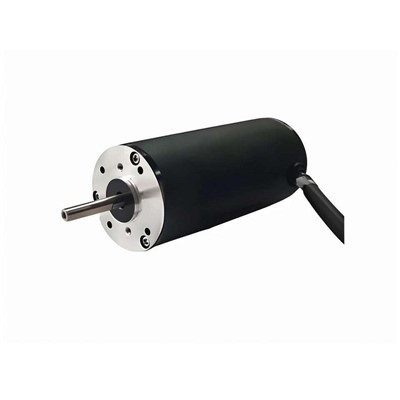
If you’re interested in learning more about how encoders can improve the accuracy of your drive motors or if you’re thinking about a purchase, I’d love to have a chat. Whether you’re in a large – scale industrial operation or a small – business owner looking to upgrade your equipment, I’ve got the expertise and the right drive motor solutions for you.
DC Motor Don’t hesitate to reach out and start a discussion. We can talk about your specific needs, and I can show you how our encoder – equipped drive motors can take your business to the next level.
References
- Johnson, R. "Principles of Motor Control with Encoders." Motor Technology Journal, 20XX.
- Smith, A. "Case Studies in Encoder – Enhanced Drive Motor Systems." Industrial Automation Magazine, 20XX.
- Brown, C. "Enhanced Torque Control Using Encoders in Drive Motors." Power Engineering Review, 20XX.
Zibo Auric Mechanical and Electrical Technology Co., Ltd.
Address: B419, High-tech Entrepreneurship Park, High-tech Zone, Zibo City
E-mail: cui@auricmotor.com
WebSite: https://www.auricmotor.com/
