When it comes to level measurement in industrial tanks, many challenges can arise, especially in tanks equipped with agitators. As a supplier of capacitive level meters, I often receive inquiries from customers wondering if a capacitive level meter can be effectively used in such environments. In this blog post, I will delve into the technical aspects, advantages, potential challenges, and solutions associated with using capacitive level meters in tanks with agitators. Capacitive Level Meter
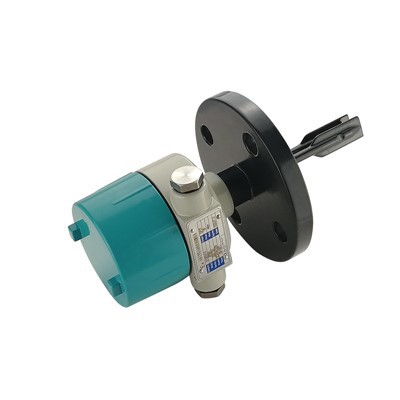
Understanding Capacitive Level Meters
Before we discuss their application in agitated tanks, let’s briefly understand how capacitive level meters work. A capacitive level meter operates based on the principle of capacitance, which is the ability of two conductors separated by an insulating material (dielectric) to store electrical charge. In a level measurement scenario, the capacitance between the probe and the tank wall (or a reference electrode) changes as the level of the medium in the tank varies.
The dielectric constant of the measured medium plays a crucial role. When the medium level rises and covers more of the probe, the effective dielectric constant between the probe and the reference changes, resulting in a measurable change in capacitance. This change is then converted into a corresponding level value, which can be displayed or used for control purposes.
Advantages of Using Capacitive Level Meters in Agitated Tanks
Non – Intrusive or Low – Intrusive Design
Many capacitive level meters can be installed in a non – intrusive or low – intrusive manner. For non – intrusive models, the sensors can be mounted on the outside of the tank, eliminating the need for direct contact with the agitated medium. This reduces the risk of mechanical damage from the agitator blades. Even for intrusive models, the probe can be designed to be compact and robust, minimizing the interference with the agitator’s operation.
Wide Compatibility
Capacitive level meters can be used with a wide range of media, including liquids, granular solids, and slurries. In agitated tanks, this versatility is a significant advantage as various substances may be processed or stored. Whether it’s a chemical solution, a food product, or a pharmaceutical mixture, a capacitive level meter can often be calibrated to provide accurate level measurements.
High Sensitivity
Capacitive level meters are highly sensitive to changes in the dielectric constant, which means they can detect even small changes in the medium level. In an agitated tank, where the surface of the medium may be constantly moving, this sensitivity allows for real – time and accurate level monitoring, which is essential for maintaining process efficiency and product quality.
Potential Challenges in Using Capacitive Level Meters in Agitated Tanks
Mechanical Interference
The most obvious challenge is the potential mechanical interference between the agitator blades and the capacitive level meter probe. If the probe is not properly installed or configured, the high – speed rotating agitator blades can damage the probe, leading to inaccurate measurements or even complete failure of the level meter.
Foam and Air Bubbles
Agitation often generates foam and air bubbles in the tank. Foam has a different dielectric constant compared to the liquid medium, which can cause the capacitive level meter to misinterpret the level. Air bubbles can also interfere with the capacitance measurement, especially if they accumulate around the probe.
Vibration and Flow Turbulence
The agitation process creates vibration and flow turbulence in the tank. These dynamic forces can cause the probe to move slightly, affecting the capacitance measurement. Additionally, the uneven flow pattern can lead to inconsistent dielectric properties around the probe, resulting in measurement errors.
Solutions to Overcome the Challenges
Proper Installation
To avoid mechanical interference, it is crucial to install the capacitive level meter probe in a location where it is least likely to come into contact with the agitator blades. This may involve using custom – made mounting brackets or selecting a probe with a suitable length and shape. For example, a retractable probe can be used, allowing it to be adjusted to a safe distance from the agitator.
Foam and Bubble Compensation
To address the issue of foam and air bubbles, some capacitive level meters are equipped with advanced signal processing algorithms. These algorithms can distinguish between the foam and the actual liquid level by analyzing the capacitance values over time. Additionally, anti – foam agents can be used in the process to reduce the formation of foam.
Vibration and Turbulence Dampening
To minimize the impact of vibration and flow turbulence, vibration – dampening mounts can be used to secure the level meter. These mounts absorb the vibrations and prevent them from being transferred to the probe. Moreover, the probe can be designed with a protective shield to reduce the direct impact of the turbulent flow.
Real – World Applications
In the chemical industry, agitated tanks are commonly used for mixing different chemicals. A capacitive level meter can be used to monitor the level of the reactants during the mixing process. By providing accurate level information, it helps to ensure the correct ratio of chemicals, which is crucial for the quality of the final product.
In the food and beverage industry, agitated tanks are used for fermentation, blending, and storage. Capacitive level meters can be used to monitor the level of liquids such as fruit juices, dairy products, and beer. Their non – intrusive or low – intrusive design makes them suitable for hygienic applications, as they can be easily cleaned and sanitized.
Conclusion
In conclusion, a capacitive level meter can indeed be used in a tank with agitators. Although there are challenges associated with the agitation process, such as mechanical interference, foam and air bubbles, and vibration and flow turbulence, these challenges can be effectively overcome through proper installation, advanced signal processing, and the use of appropriate accessories.

As a supplier of capacitive level meters, we have extensive experience in providing tailored solutions for various industrial applications. Whether you are in the chemical, food and beverage, pharmaceutical, or any other industry, our team of experts can help you select the right capacitive level meter for your agitated tank. We are committed to providing high – quality products and excellent customer service to ensure that your level measurement needs are met with reliability and accuracy.
Vibration Viscometer If you are interested in learning more about our capacitive level meters or would like to discuss your specific application requirements, please do not hesitate to contact us. We look forward to hearing from you and working together to achieve your industrial goals.
References
- Beckwith, T. G., Marangoni, R. D., & Lienhard, J. H. (2006). Mechanical Measurements (5th ed.). Pearson Prentice Hall.
- Doebelin, E. O., & Payne, D. L. (2011). Measurement Systems: Application and Design (5th ed.). McGraw – Hill.
- ISO 11693:2013. Measurement of liquid level in storage tanks — Ultrasonic guided wave radar level gauges.
Shandong Aipuxin Automation Instrument Co., Ltd.
Shandong Aipuxin Automation Instrument Co., Ltd. is one of the most professional capacitive level meter manufacturers and suppliers in China, specialized in providing high quality customized service. We warmly welcome you to wholesale cheap capacitive level meter in stock here from our factory. For price consultation, contact us.
Address: Huigu Phase 1, Zhongnan High-tech Canal New City, Rencheng District, Jining City, Shandong Province
E-mail: aipuxin0124@gmail.com
WebSite: https://www.aipxin.com/
