Antenna technology has witnessed a remarkable journey of evolution over the years, transforming the way we communicate, access information, and interact with the world. As an antenna supplier, I have had the privilege of witnessing firsthand the profound changes and advancements in this field. In this blog post, I will take you on a historical tour of antenna technology, exploring its key milestones, technological breakthroughs, and the impact it has had on various industries. Antenna

Early Beginnings: The Birth of Antenna Technology
The story of antenna technology dates back to the late 19th century, a period marked by significant scientific discoveries and technological innovations. In 1886, German physicist Heinrich Hertz conducted a series of experiments that demonstrated the existence of electromagnetic waves, a fundamental concept in antenna technology. Hertz’s experiments laid the foundation for the development of wireless communication systems, paving the way for the invention of the radio.
The first practical antenna was developed by Guglielmo Marconi in 1895. Marconi’s antenna, known as the Marconi antenna, was a simple vertical wire that was used to transmit and receive radio signals. This invention revolutionized the field of communication, enabling long-distance wireless communication for the first time. Marconi’s work led to the establishment of the first radio communication networks, which were used for ship-to-shore and ship-to-ship communication.
The Golden Age of Radio: Antenna Technology in the 20th Century
The 20th century witnessed a rapid expansion of radio communication, driven by the development of new antenna technologies and the increasing demand for wireless communication. In the early 1900s, the development of the vacuum tube and the introduction of amplitude modulation (AM) and frequency modulation (FM) techniques revolutionized radio broadcasting. These advancements led to the widespread adoption of radio as a medium for news, entertainment, and communication.
During this period, antenna technology also underwent significant advancements. The development of directional antennas, such as the Yagi-Uda antenna and the parabolic reflector antenna, allowed for more efficient and targeted transmission and reception of radio signals. These antennas were used in a variety of applications, including radio broadcasting, radar systems, and satellite communication.
The Second World War also played a crucial role in the development of antenna technology. The military’s need for reliable communication systems led to the development of new antenna designs and technologies, such as the phased array antenna. Phased array antennas use a large number of small antennas to create a beam of radio waves that can be steered electronically. This technology allowed for more precise and efficient communication, making it ideal for military applications.
The Digital Revolution: Antenna Technology in the 21st Century
The 21st century has witnessed a digital revolution that has transformed the way we communicate and access information. The widespread adoption of mobile devices, such as smartphones and tablets, has led to an increasing demand for high-speed wireless communication. This has driven the development of new antenna technologies, such as multiple-input multiple-output (MIMO) antennas and millimeter-wave antennas.
MIMO antennas use multiple antennas to transmit and receive multiple data streams simultaneously, increasing the data rate and improving the reliability of wireless communication. This technology has been widely adopted in 4G and 5G wireless networks, enabling high-speed data transfer and improved network performance.
Millimeter-wave antennas operate at frequencies in the millimeter-wave band, which offers higher data rates and greater bandwidth compared to traditional radio frequencies. These antennas are used in 5G wireless networks to provide high-speed data transfer and low-latency communication. However, millimeter-wave signals have a shorter range and are more easily blocked by obstacles, which requires the deployment of a large number of small cells to ensure reliable coverage.
The Future of Antenna Technology
The future of antenna technology is promising, with continued advancements in materials, design, and manufacturing techniques. One of the key trends in antenna technology is the development of smart antennas, which use artificial intelligence and machine learning algorithms to adapt to changing environmental conditions and optimize the performance of the antenna. Smart antennas can improve the efficiency and reliability of wireless communication, making them ideal for applications such as autonomous vehicles, smart cities, and the Internet of Things (IoT).
Another trend in antenna technology is the integration of antennas into other devices and structures. For example, antennas can be integrated into the body of a smartphone or the roof of a car, reducing the size and complexity of the device. This trend is expected to continue in the future, with the development of more compact and efficient antennas that can be integrated into a wide range of devices and applications.
Conclusion
Antenna technology has come a long way since its humble beginnings in the late 19th century. From the simple Marconi antenna to the advanced MIMO and millimeter-wave antennas of today, antenna technology has played a crucial role in the development of wireless communication systems. As an antenna supplier, I am excited to be a part of this dynamic and evolving industry.
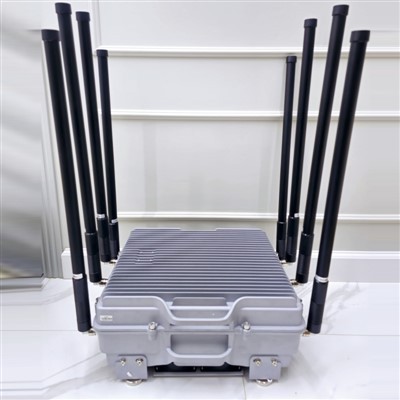
Manpack Drone Jammer If you are interested in learning more about our antenna products and solutions, or if you have any questions or inquiries, please feel free to contact us. We are committed to providing high-quality antenna products and services that meet the needs of our customers. Let’s work together to shape the future of wireless communication.
References
- Balanis, C. A. (2016). Antenna theory: analysis and design. John Wiley & Sons.
- Pozar, D. M. (2011). Microwave engineering. John Wiley & Sons.
- Stutzman, W. L., & Thiele, G. A. (2012). Antenna theory and design. John Wiley & Sons.
Nuoxinyuan Technology Co., Ltd.
As one of the leading antenna manufacturers and suppliers in China, we warmly welcome you to buy high-grade antenna made in China here from our factory. All our products are with high quality and competitive price.
Address: Longgang District, Shenzhen, Guangdong Province
E-mail: sammohunh@gmail.com
WebSite: https://www.nxyjammer.com/
