Titanium is a remarkable metal known for its high strength-to-weight ratio, excellent corrosion resistance, and biocompatibility. These properties make it a preferred choice in various industries, including aerospace, medical, automotive, and marine. When working with titanium, two common manufacturing processes are forging and casting. As a titanium forging supplier, I’ve seen firsthand the differences between these two methods and their respective impacts on the final product. In this blog, I’ll explore how titanium forging compares to casting, highlighting the advantages and disadvantages of each. Titanium Forging
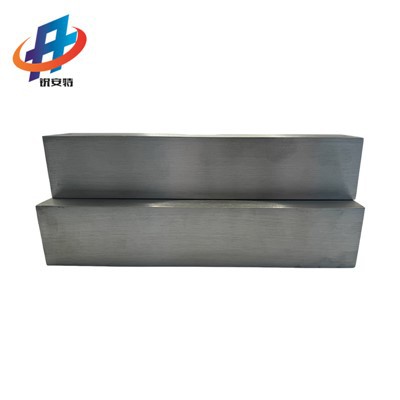
Understanding Titanium Forging and Casting
Before diving into the comparison, it’s essential to understand what titanium forging and casting entail.
Titanium Forging
Forging is a manufacturing process in which metal is shaped by applying compressive forces through hammering, pressing, or rolling. In titanium forging, a heated titanium billet is placed between two dies. The dies then apply pressure to the billet, causing it to flow and take on the shape of the cavity. This process can be performed at various temperatures, including hot forging (performed above the recrystallization temperature of titanium), warm forging (performed below the recrystallization temperature but above room temperature), and cold forging (performed at room temperature).
Titanium Casting
Casting, on the other hand, involves pouring molten titanium into a mold cavity. Once the titanium has cooled and solidified, the mold is removed, leaving behind a part with the desired shape. There are several types of casting methods, including investment casting, sand casting, and die casting. Investment casting, also known as the lost-wax process, is particularly popular for titanium parts due to its ability to produce complex shapes with high precision.
Mechanical Properties
One of the most significant differences between titanium forging and casting lies in the mechanical properties of the final products.
Strength and Ductility
Forged titanium parts generally have superior strength and ductility compared to cast parts. During the forging process, the metal’s grain structure is refined and aligned in the direction of the applied force. This results in a more uniform and continuous grain flow, which enhances the part’s strength and resistance to fatigue and cracking. In contrast, cast titanium parts often have a coarser and more random grain structure, which can lead to lower strength and ductility.
Anisotropy
Forged titanium parts can exhibit anisotropic properties, meaning their mechanical properties vary depending on the direction of the grain flow. This can be an advantage in applications where the part is subjected to directional forces, as the forging process can be tailored to align the grain structure in the direction of the expected loads. Cast parts, on the other hand, are generally isotropic, with uniform properties in all directions.
Pore and Inclusion Content
Casting processes can sometimes result in the formation of pores and inclusions in the final product. These defects can reduce the part’s strength and fatigue resistance. In forging, the compressive forces applied during the process help to eliminate internal voids and pores, resulting in a denser and more homogeneous part.
Dimensional Accuracy and Complexity
The choice between forging and casting can also depend on the required dimensional accuracy and complexity of the part.
Dimensional Accuracy
Forging can achieve high dimensional accuracy, especially when using precision forging techniques. However, forging is generally subject to some degree of shrinkage and deformation during the process, which may require additional machining to achieve the final dimensions. Casting, particularly investment casting, can produce parts with very high dimensional accuracy and fine surface finishes, often requiring little to no machining.
Complexity
Casting is well-suited for producing parts with complex shapes and geometries, including internal cavities and thin walls. The ability to pour molten metal into a mold allows for the creation of intricate designs that would be difficult or impossible to achieve through forging. Forging, on the other hand, is better suited for producing simple to moderately complex shapes with a relatively uniform cross-section.
Production Volume and Cost
The production volume and cost are important considerations when choosing between titanium forging and casting.
Production Volume
Forging is typically more cost-effective for medium to high production volumes. Although the initial tooling costs for forging can be high, the per-part cost decreases as the production volume increases. Casting, on the other hand, can be more cost-effective for low to medium production volumes, as the tooling costs are generally lower, and the setup time is shorter.
Cost
The cost of titanium forging and casting also depends on several factors, including the raw material cost, the complexity of the part, and the required finish. Forging generally requires more energy and labor than casting, which can result in higher production costs. However, the superior mechanical properties of forged parts may justify the higher cost in applications where performance is critical.
Applications
The choice between titanium forging and casting often depends on the specific application requirements.
Aerospace and Defense
In the aerospace and defense industries, the high strength and fatigue resistance of forged titanium make it an ideal choice for critical components such as engine parts, landing gear, and structural components. Casting, on the other hand, is often used for non-critical components with complex shapes, such as decorative parts and housings.
Medical
In the medical industry, both forging and casting are used to produce titanium implants. Forged titanium implants offer superior strength and ductility, which are important for load-bearing applications such as hip and knee replacements. Casting is often used for producing more complex implant designs, such as dental implants and craniofacial implants.
Automotive and Marine
In the automotive and marine industries, forged titanium is used for components that require high strength and low weight, such as connecting rods, valves, and propeller shafts. Casting is used for producing parts with complex shapes, such as engine blocks and housings.
Conclusion

In conclusion, both titanium forging and casting have their own unique advantages and disadvantages. Titanium forging offers superior mechanical properties, including high strength, ductility, and fatigue resistance, making it ideal for applications where performance is critical. However, forging is generally more expensive and less suitable for producing complex shapes. Casting, on the other hand, can produce parts with high dimensional accuracy and complex geometries at a lower cost, but the resulting parts may have lower mechanical properties.
Pure Titanium Sheet As a titanium forging supplier, I’m committed to providing high-quality forged titanium parts that meet the most demanding application requirements. Whether you need a simple forged component or a complex custom design, I have the expertise and capabilities to deliver the perfect solution. If you’re considering adopting titanium forging for your next project, I encourage you to contact me to discuss your specific needs and requirements. I’d be happy to provide you with more information and help you determine the best manufacturing process for your application.
References
- "Titanium: A Technical Guide", Third Edition, by Harold E. Boyer and Edward W. Collings
- "Metal Forming: Processes and Analysis", Second Edition, by Robert H. Wagoner and Karin L. Pilkey
- "Casting, Forming and Welding: Processes and Materials", by J. R. Davis
Baoji Ruant Titanium Industry Co., Ltd
We’re professional titanium forging manufacturers and suppliers in China, specialized in providing high quality customized service. We warmly welcome you to buy titanium forging for sale here and get quotation from our factory. For price consultation, contact us.
Address: No.25 Hi-Tech Road, Hi-Tech Development Zone, Baoji City, Shaanxi Province, China
E-mail: leoren@ruantti.com
WebSite: https://www.ruantti.com/
